
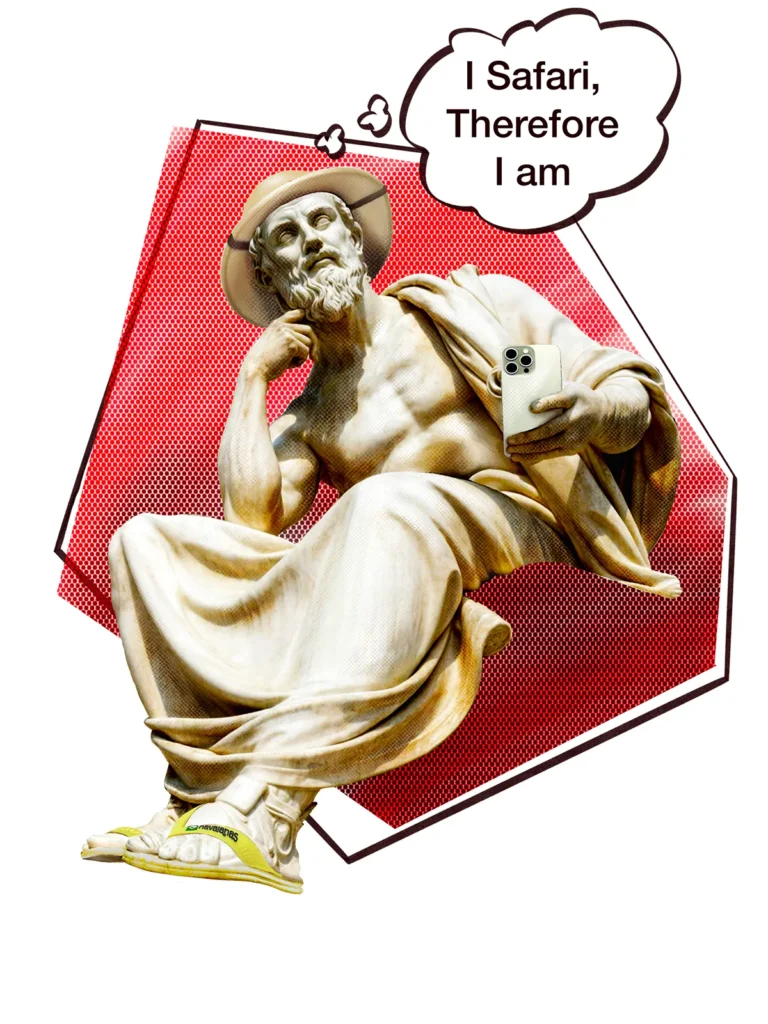
We live in the information age—an era in which curiosity can be satisfied almost instantly. Yet this drive to document and share experiences is nothing new.
In 1839, Pierre-Gustave-Gaspard Joly de Lotbinière travelled to Greece with a rudimentary daguerreotype camera and captured some of the earliest photographs of Athens and the Acropolis. In 1840–41, Noël Paymal Lerebours published Joly’s images in Excursions Daguerriennes, widely regarded as the world’s first travel photography book. Until then, books had relied on engravings and illustrations. Travel photography had arrived, and it would forever change how we see the world.
Almost a decade later, in 1849, Frenchmen Maxime du Camp and Gustave Flaubert set off for Egypt and the Middle East with more portable equipment. Du Camp took hundreds of photographs while Flaubert kept detailed journals. Upon their return, their work gained widespread acclaim—making them, in a sense, the first travel influencers.
Around the same time, increasing numbers of Europeans ventured into the colonies. These journeys were expensive, available mainly to the wealthy who could afford large caravans of porters and guides. In the 1850s, the British explorer Richard Francis Burton—prolific adventurer, linguist, and member of the Royal Geographical Society—helped popularise the term “safari” in English. Derived from the Swahili kusafari (to travel), which itself comes from the Arabic safar, the word originally simply meant “journey.”
Technology evolved alongside these travellers. Early cameras were cumbersome, but humanity’s love of storytelling fueled rapid innovation. Today, companies like Apple and Samsung rank among the world’s largest, to phone grandma, to check the time, to play games in the dentist’s waiting room, and yes, to take spectacular photos with a tiny pocket device.
This brings us to Herodotus. In the 5th century BCE, the Greek historian wrote The Histories, a sweeping account of the Greco-Persian Wars and the cultures he encountered. Cicero later called him “the Father of History.” Herodotus travelled widely and recorded what he saw and heard—sometimes accurately, sometimes mixing in legend. In many ways, he was the original travel documentarian.
Today we are all Herodotuses. Recent estimates suggest YouTube users upload around 500 hours of video every minute—roughly 30,000 hours per hour. Our phones have turned billions of ordinary people into prolific chroniclers of daily life. The physical moments pass, but the digital record remains. We have created a society of historians more productive than any before us. Herodotus would surely be proud.
Herodotus
We live in the information age. This is great, and for most of us, we have gotten used to the fact that we can find anything we want to know. Want to build a house with toilet roll paper mache and empty coke cans? There is a video for that. Want to know when the next waxing gibbous moon will be? There is a chart for that. Information is everywhere, created and curated by millions of willing and unwilling contributors.
The drive for information was the guiding force when Pierre-Gustave-Gaspard Joly de Lotbinière travelled to Greece in 1839 to capture images of Athens and the Acropolis with his rudimentary camera. In 1840, Noël-Paymal Lerebours published Joly’s work in a book titled Excursions Daguerriennes featuring 92 photos by Joly, which is now considered the world’s first travel photography book. Up to that point, publications had used illustrations to depict attractions, monuments and places of interest. Travel photography had arrived, and it would change how we perceive the world forever as it evolved from journalism to the aesthetic and the modern-day Instagrammer.
Forward a few years to 1849. The Frenchmen Maxime du Camp and Gustave Flaubert travel to North Africa and the Middle East carrying a more portable and versatile tripod camera and mobile equipment, taking ‘hundreds of pictures’. On their return home, they presented it to the public and gained instant recognition, becoming, dare I say it, the first influencers for posting their experience via photographs, sparking wide interest in travel to their photographed locales!
During the same time, Europeans start travelling more to the ‘colonies’. The travel habit, however, is expensive and is reserved for the super wealthy, able to afford caravans of porters, pack animals and guides. In the 1850’s, a particularly tenacious and adventurous man called Richard Francis Burton coined the term Safari! It originated as a Swahili word meaning “journey”, originally from the Arab word safar, meaning “journey”, “travel”, “trip”, or “tour”. The verb “to travel” in Swahili is kusafari. He was a prolific traveller and adventurer, spoke many languages, including Arabic, and was a member of the British Royal Geographic Society, from where his travel terminology made it into English.
With every traveller and adventurer, technology went along. Cumbersome and inefficient at first, but with our love for telling stories and sharing our adventures, the resources in its development grew and grew. Today, companies like Apple and Samsung are not just well known, they are some of the biggest companies in the world!
Where does Herodotus come into this? Herodotus wrote the Histories, a detailed account of the Greco-Persian Wars, among other subjects such as the rise of the Achaemenid dynasty of Cyrus. He has been described as “The Father of History”, a title conferred on him by the ancient Roman orator Cicero. History, as a recording of past events has never been as healthy as it has been today. We might be in the information age, but actually, we are also the inhabitants of a world being recorded every hour of every day. Based on recent data, about 30 000 hours of video is uploaded to Youtube every hour. It would take over 199,771 years to watch all the videos available on YouTube today.
Like Joly and Burton, our physical time here shall pass, but like their legacies of travel, adventure and recording their experience, each one of us with a smartphone in the pocket, are creating a world that is past, but will never vanish. We have inadvertently created a society of historians more prolific than any epoch before. Herodotus would be proud.